Staying far from one’s Land, from one’s origins, from one’s borders. When you leave your comfort zone, it is never an absolute pleasure. It’s more like a tooth extraction performed without enough anesthesia: you know it’s necessary to remove the infection, but the pain reminds you that you’re still alive.
Have you ever wondered how human beings manage to pack decades of trauma, broken dreams, and faded posters into a few cardboard boxes? Is it a miracle of logistics or just a form of collective repression? We ask ourselves: “How does one leave their home, the places of childhood, those safe spaces that have always made us think of home?” The answer is simple and brutal: we convince ourselves that elsewhere we will be better, while we are merely moving our mental clutter into another room.
Reaching distant places, unknown spots, environments completely different from what we’ve always known. It’s a bit like changing the operating system of your own brain. Except the software is old and the hardware is already dented.
It seemed I could never leave my parents’ dwelling, yet it happened. I was 28—the age when people used to lead armies, and today we struggle to decide on the color of throw pillows. I was to become a husband a few months after my birthday. And it already felt surreal that I would be filling duffel bags, boxes, backpacks, and massive sacks.
My father looked at those rooms and called it all “junk.” Books I would never reread, shoes I would never run in again, that computer full of files that are the digital equivalent of an illegal landfill. To him, they were encumbrances; to me, they were pieces of a skin I was struggling to shed.
I would take them to the new abode. Which, in reality, had nothing “new” about it. It was a house that had already seen other lives, other failures, other dreams rotting in the corners. But for my objects, it was an alien space. Seeing your favorite mug on an unfamiliar shelf is a lysergic experience: that object belongs to my past, to my world, to my being, but now it is catapulted into a reality that doesn’t recognize it.
When I began to walk down the new hallway that would lead me to the new rooms, I started to feel the distance from those walls that had accompanied me for as long as I could remember. You know that feeling of unease, that knot in your stomach that says, “Go back, there’s a warm dinner there and nobody is asking you to pay property taxes”?
It took a while before I realized what had happened. I was becoming a man. Or at least, I was playing the part with a certain theatrical success. Finally, I told myself, I managed to cut that cord clean. Let’s not call it the “umbilical cord”—it’s too childish and smells of hospitals. Let’s call it the “existential leash.”
That cord kept me tied to a place that, in the end, was never truly mine. It’s the great scam of birth: you don’t choose your parents and, likewise, you don’t choose your childhood home. You just find it all around you, like a prison decorated with Dragon Ball posters or lace curtains embroidered by an aunt you don’t even remember. It’s a movie set where you were cast without an audition. And leaving it isn’t freedom; it’s just a change of scenery.
Memories, smells, sounds, faces, tears, and laughter. Everything remains helpless and silent in our recollections. But let’s be honest: memories are unreliable narrators. Some of them have left clear marks of their passage. Scars.
Some stay on the surface. These are the ones you show off at dinner parties to look “experienced”: that scraped knee at six years old, that heartbreak that makes you laugh now. They are there to remind you of how fragile we humans are. But the serious scars, the real ones, stay in the shadows. Under the skin, in the soul.
Those wounds don’t serve to remind you of how fragile you are, but how weak others can be. The weakness of those who didn’t know how to love you, the weakness of those who built you a house of sand and convinced you it was reinforced concrete. Internal scars are the map of a no man’s land where we fought invisible wars against our own ghosts.
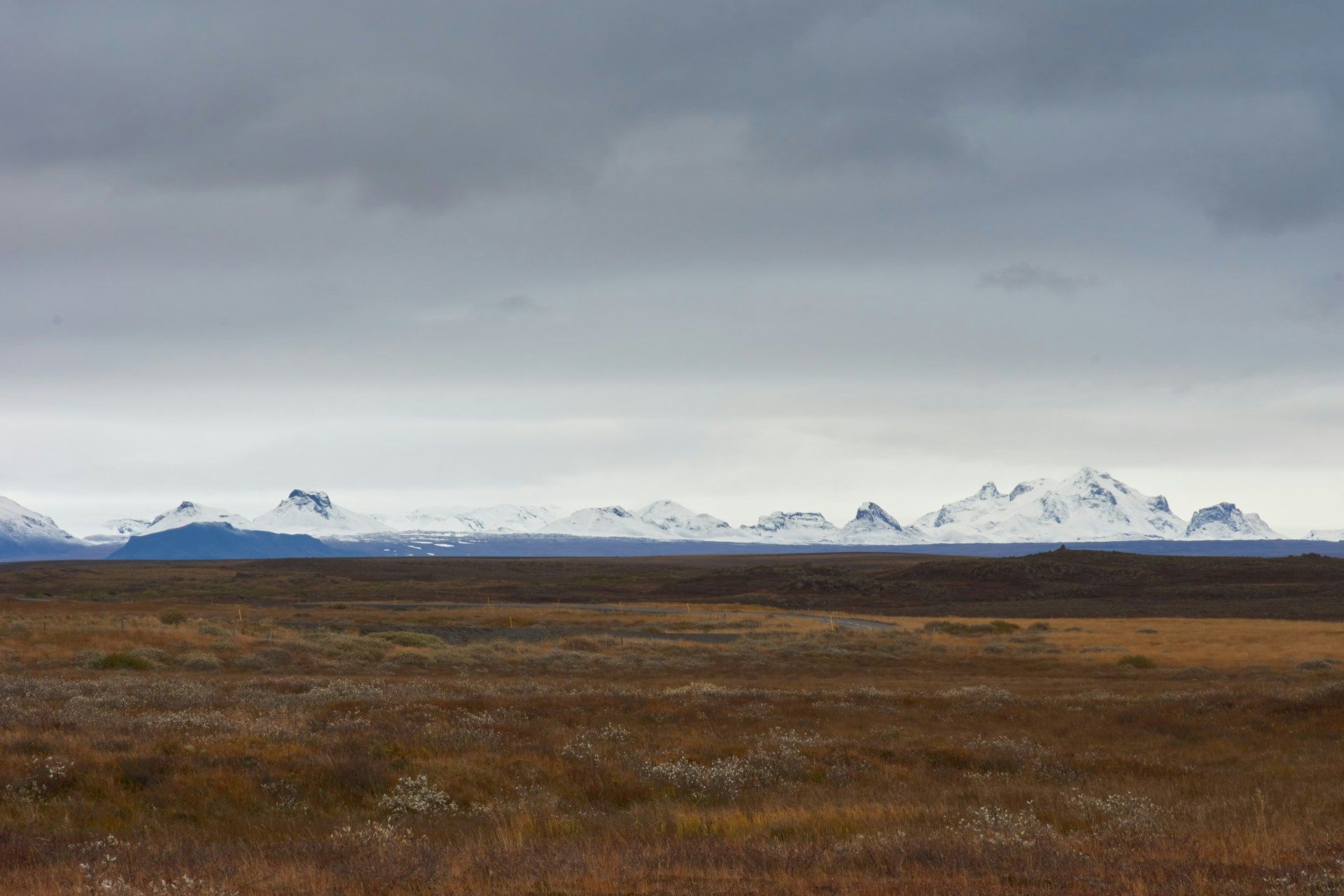
Everything is born from memory. Yet, when we turn toward our past and fix our gaze on the now distant and tiny horizon, where the tip of that house’s roof can still be glimpsed, something pathetic happens.
That distance reverberates in our soul, giving us the feeling that without that floor where we ran as children, we are lost. Without that bed where we hid from the dark (thinking a cotton blanket could stop monsters—how naive), we feel naked.
We don’t put it into words. It would be an act of self-sabotage toward others. If I told my neighbor, “I miss the way the light hit the crack in my bedroom wall in 1998,” they would judge me as childish. Or crazy. But the truth is, we are all fetishes for bricks and mortar. We look in every new house for that ghost of security we lost the moment we learned how to read a utility bill.
Living outside the environment that welcomed us since we were small, we just want to convince ourselves that we can make it. We want to write a new story made of steps, grooves, and falls. But the truth is more bitter than coffee forgotten on the stove: wherever we go, we will never be masters of other places.
We will always be nomads. Adventurers with back pain, nostalgic souls with 5G Wi-Fi. We can be whoever we want, change our names, our style, our city, but we will always be nomads of a no man’s land. So, should we go back to where it all started?
Of course not. It would be like trying to squeeze back into your first communion suit: you’d just end up ripping the seams and looking ridiculous. It wouldn’t be the same anymore. That house, those walls, are now rooted in memory. But we won’t find those doors anywhere else. Not even by physically going back there. Because the house stayed the same, but we have changed forever. We have become strangers who know the position of the light switches by heart.
The instant we directed our steps toward a new dwelling, we signed a treaty of voluntary exile.
And that very dwelling, where we stand today, could tell us stories of other steps, other thoughts, and memories of people who crossed that floor before us. Who knows how many others felt like “nomads” in this very room. How many others tried to wash away the smell of the past with a coat of white paint.
That house is, and will always be, a no man’s land. A seaport for souls in transit who delude themselves into thinking they’ve found a safe harbor.
Good night, nomads. Try not to trip over the boxes of your soul. Taxatively.