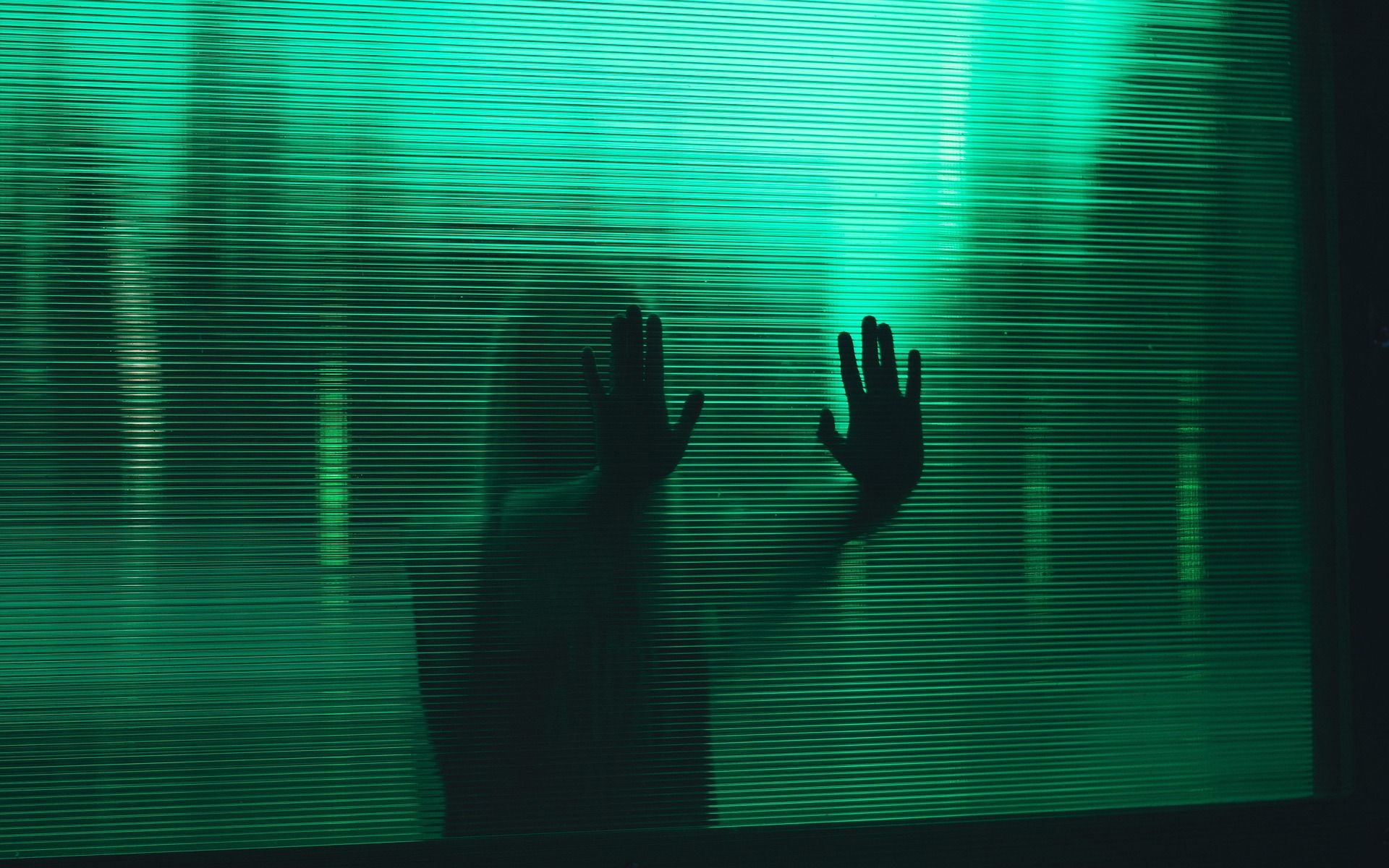
Once upon a time, there was the promise of a connected world. Today, that world is a lazar house of souls hunched over a glowing rectangle, intent on trading fragments of life for handfuls of digital bile. It is no longer connection; it is an intravenous injection of pure alienation.
It all started with a reassuring smile and the promise of finding your elementary school classmate. Zuckerberg sold us the utopia of “Connecting People,” but he forgot to mention the clauses written in blood at the bottom of the contract. That primordial concept of a social platform has disintegrated, leaving behind something infinitely darker. It’s not an evolution; it’s a cancerous mutation. We moved from wanting to shorten distances to wanting to measure our worth based on how fast a stranger’s thumb moves across a screen.
Today, social media are no longer tools; they are placebo substances designed to saturate dopamine receptors until the brain implodes. It is a subtle poison, one that doesn’t kill you instantly, but consumes your days like a cigarette forgotten in an ashtray. We look back and see a desert of hours wasted scrolling through pixels, while real life—dirty, exhausting, and magnificent—was happening elsewhere. Zuckerberg didn’t build a bridge; he erected a backlit glass wall where each of us is simultaneously the jailer and the prisoner.
Imagine an infinite building, a modern Tower of Babel silhouetted against a perpetually leaden sky. Facing the common street are hundreds of thousands of windows, all lit by the same bluish light—cold and aseptic. Behind every pane, there is a character. Real subjects, caricatures of themselves, or total inventions created by an equally cynical artificial intelligence. Each of them puts on their own show, their own daily masquerade.
There are those dancing in the void, those crying on command, those flaunting a wealth made of plastic and filters. And all this for what? For a mere handful of coins, for a “like” that has the same nutritional value as a piece of cardboard. It is a vanity fair where the entry ticket is one’s own dignity. The audience, on the other side of the glass, delights in seeing hundreds of these grotesque spectacles, swiping from one agony to another with a simple mechanical gesture. It is a mass voyeurism that generates no empathy, only a sense of artificial satiety.
While the show goes on, time passes inexorably. It isn’t time that flows; it’s time being devoured. The addiction creeps into the folds of everyday life with the same discretion as a parasite. You start with five minutes and find yourself three hours later with a stiff neck and bloodshot eyes, wondering where your evening went. The digital drug creates a dependency that makes you unrecognizable.
Look at yourself in the mirror after an intensive session on TikTok or Instagram. What you see is no longer a vibrant human being, but a hollowed-out shell, with eyes lost in a horizon only a few millimeters deep. The poison acts on both body and mind: social performance anxiety, missed-life syndrome, constant-comparison depression. We have become shadows chasing other shadows, losing the somatic traits of our personality to conform to the current trending filter. We have suspiciously become strangers to ourselves, transformed into units of consumption for an algorithm that never sleeps.
Once, drugs had names that inspired fear: Heroin, Cocaine, LSD. They were illegal substances, sold on dark street corners by shady characters. Not anymore. Today, the pushers wear ties or the standard-issue gray t-shirt; they sit in air-conditioned offices in Silicon Valley, and their merchandise comes pre-installed on your smartphone. Their names are Instagram, Facebook, TikTok. And they are infinitely more dangerous because they are socially accepted—even encouraged.
The mechanics are the same. The infinite “refresh” is our syringe. The red notification is our “shot.” It is a variable reward system that keeps us hooked, forcing us to return again and again, even when we know it’s hurting us. We have embraced an ephemeral sense of social dissociation, using it as a shield against a world that oppresses us. We think we are escaping reality’s problems by retreating into the screen, but we are only digging our own graves in digital soil. A drug has known how to do exactly this for decades: it offers you a fake exit that locks the door behind you forever.
We have lost human contact. The real kind, made of glances that cannot be filtered and silences that cannot be filled by a trending song. We are surrounded by thousands of “friends” and “followers,” yet we have never been so alone. It is the loneliness of the backlit building: everyone in their own room, everyone looking out, no one knocking on the door next door.
Survival, finding one’s way, facing the dangers of human nature… these are challenges we have delegated to an app. But reality doesn’t have a “block” button, and pain doesn’t disappear with a “swipe.” The poison of social media has made us fragile, incapable of handling boredom, frustration, and failure. We have become nomads of a no man’s land made of silicon, convinced we are living while we are merely watching others’ lives through glass smudged with fingerprints.
Tomorrow, new names will arrive, new platforms, new variants of the same poison. The question isn’t what they will invent, but how much of us will be left to be consumed. Perhaps it’s time to turn off the window light and try walking in the darkness of the real street. It’s scary, sure. But at least it’s real. No more excuses, no more filters.